$130+ to fill a tank. And petrol isn't even the real problem.
Written by Natalie Goretski, 29 September 2026
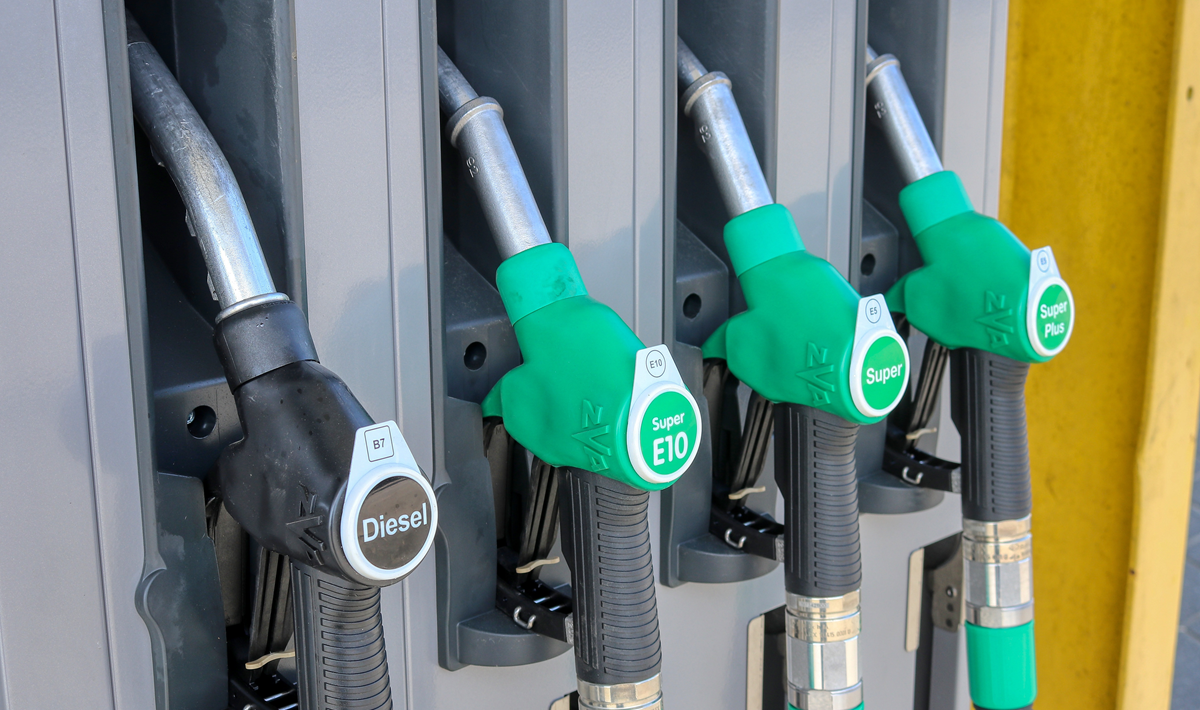
A $130 fuel bill gets your attention. But petrol is not the part of the fuel market that should concern us most. Diesel is.
You may have switched to an EV or hybrid to reduce your fuel expenses. But has that really protected you from rising costs?
Probably not.
Diesel sits underneath a huge part of the economy.
Trucks move food, building materials and manufactured goods. Farms use diesel-powered machinery. Mining, construction, freight and heavy equipment all depend heavily on it.
So when diesel prices rise, the cost doesn't stop at the gas station.
It works its way through transport, production and construction — and eventually reflects in the prices we all pay.
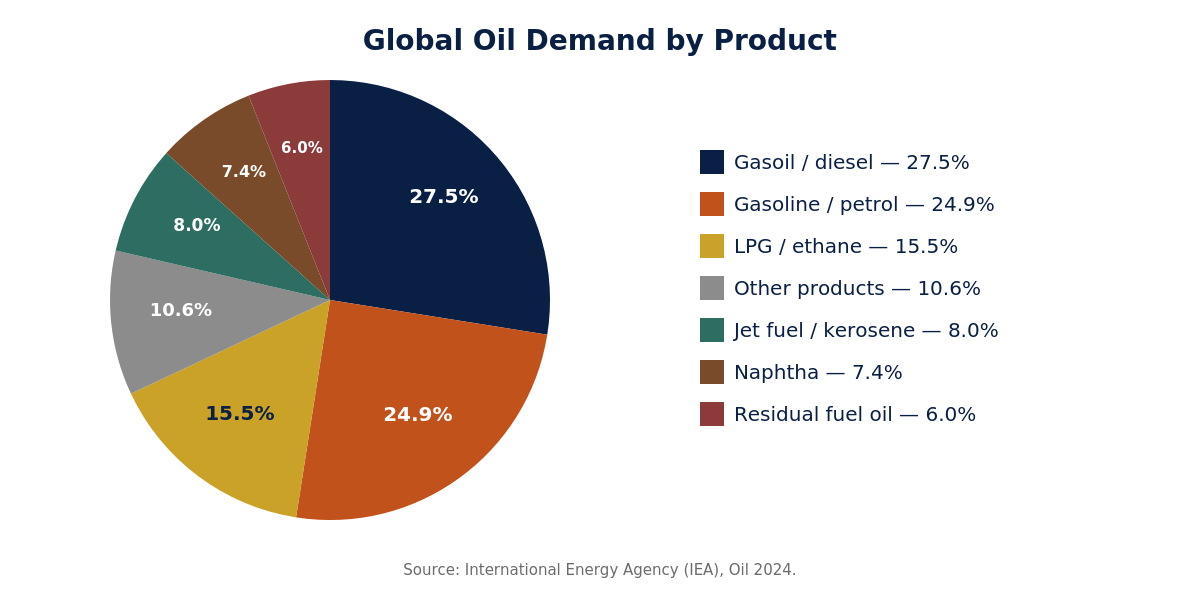
The US provides a useful warning. The national retail diesel price reached US$6.529 a gallon in the latest US Energy Information Administration data, while US distillate inventories have fallen to their lowest seasonal level on record.
Crude Oil Isn't the Whole Story
You may ask a fair question:
"What's happening with the crude oil? Don't we have enough of it?"
We do have oil, but the problem is what happens after it comes out of the ground.
It has to be refined.
From here, I did some research to see the bigger picture — and the scale of the global refining system is quite something.
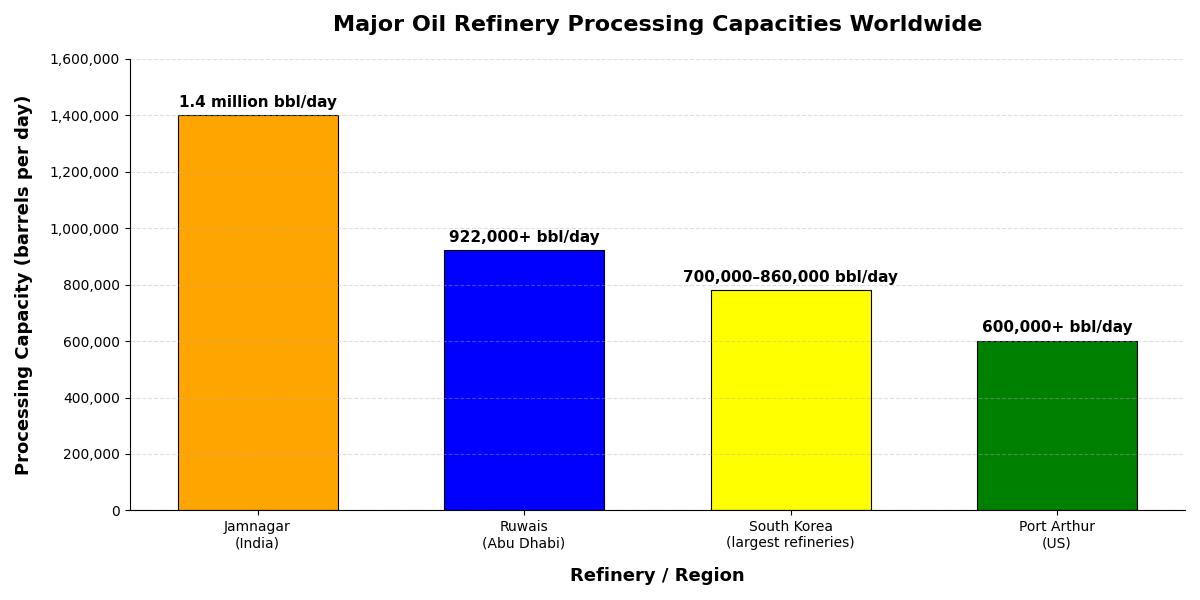
India's Jamnagar complex can process 1.4 million barrels/day. Abu Dhabi's Ruwais refinery processes more than 922,000 barrels/day. South Korea's largest refineries operate at roughly 700,000–860,000 barrels/day, while major US facilities such as Port Arthur process more than 600,000 barrels/day.
Refineries are complex systems designed around particular type of crude oil and particular product mixes. They produce gasoline, diesel, jet fuel, LPG and other products in different proportions. Some have greater flexibility than others to change that mix.
The International Energy Agency estimates that global refinery throughput in August was 81.4 million barrels a day — 4.2 million barrels a day below the same month last year. At the same time, refining margins reached record levels in the Atlantic Basin, driven particularly by diesel.
This highlights an important point: having enough crude oil does not necessarily mean having enough diesel.
Refineries have different capacities, configurations and product mixes. When refining capacity is disrupted or runs below normal levels, replacing the lost output is not as simple as finding more crude oil.
That is one reason diesel prices can respond sharply when the global refining system becomes tighter.
Australia's Place in the Market
Now let's look at Australia.
Australia has two major operating oil refineries: Lytton in Queensland and Geelong in Victoria. Their combined capacity is around 229,000 barrels a day.
Yet Australia consumes far more refined fuel than those two plants can produce.
In 2024–25, 80.8% of Australia's refined petroleum consumption was met by imports, according to Australian Government energy statistics. Our largest sources included South Korea, Singapore and Malaysia.
At the same time, Australia is a major exporter of iron ore, coal, LNG and crude oil.
So Australia's energy and resources trade operates across a global supply network: Australia exports major commodities and imports a substantial share of the refined petroleum products used domestically.
What Does the Fuel Price Really Tell Us?
What I paid at the gas station is only the final number in a much bigger system — one that depends on crude oil, refineries, shipping routes and access to global markets.
Fuel prices are shaped by conditions across that entire supply chain.
But when global supply tightens, changes in refining capacity, trade flows and shipping can affect costs well beyond the countries where the disruption begins.
The figure on the fuel board tells us what we're paying today.
The structure behind it tells us something about what we might be paying tomorrow.
Subscribe to my Newsletter if you found this interesting, I dig into what’s actually changing in personal finance and retirement like this every issue.
Natalie Goretski is the founder of iViser Academy, an online financial education platform helping high-income professionals build structured, AI-powered financial systems.
Sources:
International Energy Agency (IEA) — Oil Market Report, September 2026
Australian Government — Australian Energy Statistics, Energy Trade 2024–25
Australian Government — Australian Petroleum Statistics, 2026
NSW Chief Scientist — NSW Energy Preparedness Assessment 2024–25
Viva Energy Australia — Geelong Refinery
Reliance Industries — Jamnagar Refinery
ADNOC Refining — Ruwais Refinery
U.S. Energy Information Administration (EIA) — Refinery Rankings
Invest Korea — Ulsan Petrochemical Industry
Disclaimer: The information provided in this article, “$130+ to fill a tank. And petrol isn't even the real problem.” is intended for educational and informational purposes only. It does not constitute financial advice, legal advice, or professional recommendations.
While every effort has been made to ensure the accuracy of the information at the time of publication, iViser Academy and the author make no guarantees of completeness, reliability, or applicability to your individual circumstances.
You should always consider your personal financial situation and, where necessary, seek independent advice from a licensed financial professional before making financial decisions. The author and iViser Academy accept no liability for any loss, damage, or consequences that may arise from reliance on the content of this guide. Use of this material implies acceptance of this disclaimer.